
How to Write IELTS Natural Process Writing Task 1: Step-by-Step Guide
Many IELTS candidates find natural process diagrams intimidating because they look complex and often involve scientific terminology. However, natural processes are actually among the most straightforward tasks in Writing Task 1 once you understand the right approach.
Unlike manufacturing processes that require passive voice and technical production vocabulary, natural process writing task 1 tasks ask you to describe self-driven cycles that occur in nature. This guide will walk you through everything you need to know – from identifying natural processes to structuring your response and using the right vocabulary for a Band 7.0+ score.
See also: IELTS Writing Task 1 Process: An overview, steps and tips
What Is a Natural Process in IELTS Writing Task 1?
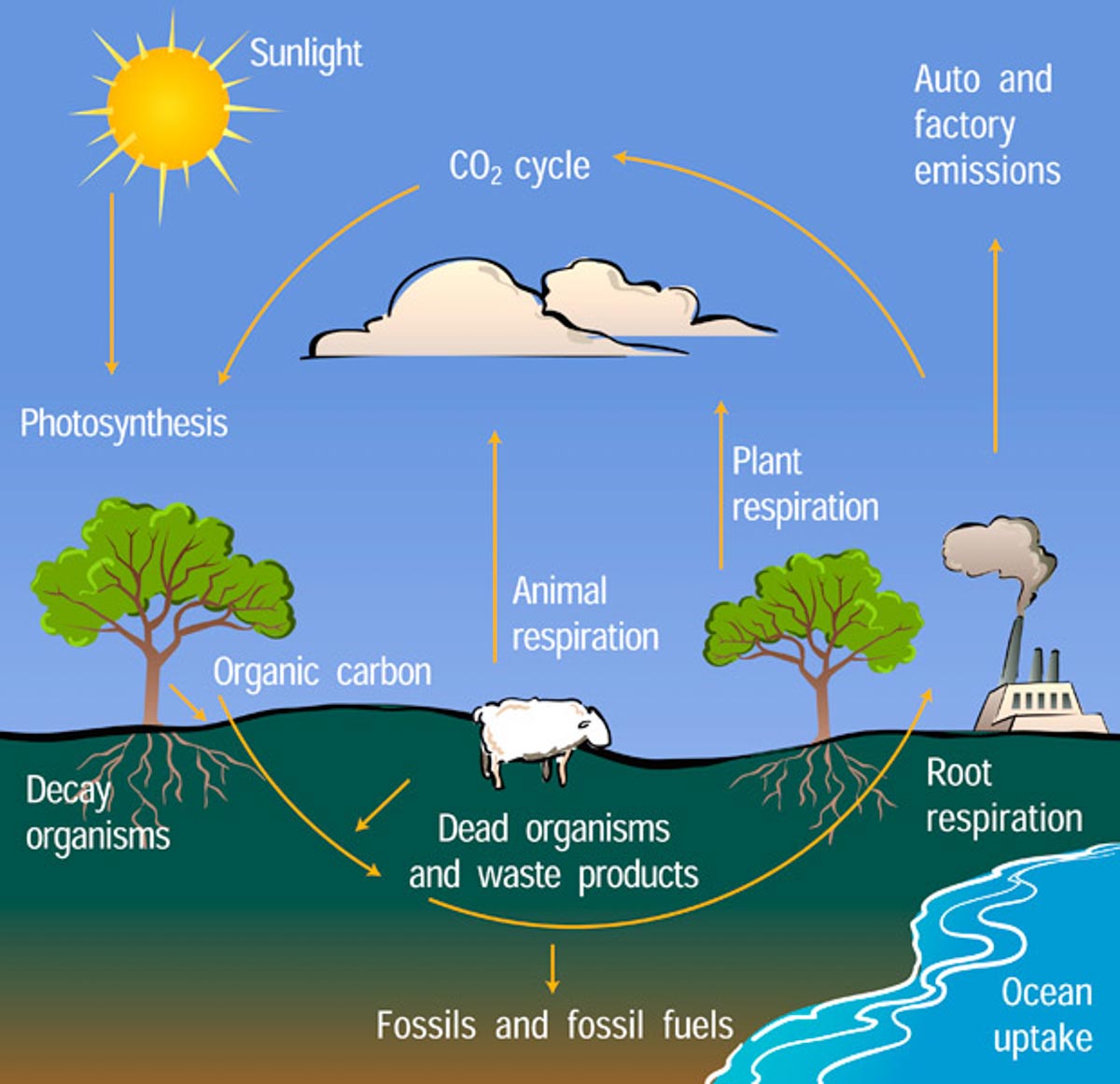
A natural process is a diagram that shows a sequence of events occurring in nature without human intervention. These diagrams typically illustrate biological life cycles or natural phenomena.
Common examples of natural process writing task 1 topics include:
Leading sentence: Before you begin writing, it is essential to understand what types of diagrams fall into the natural process category. Here are the most common examples you may encounter in the exam.
| Type of Natural Process | Examples |
| Life cycles | Life cycle of a frog, butterfly, salmon, or silkworm |
| Plant cycles | Growth of a flower, photosynthesis, seed germination |
| Weather phenomena | Water cycle, rainfall formation, evaporation |
| Geological processes | Rock formation, carbon cycle |
Unlike man-made processes, natural processes are cyclical – they repeat themselves continuously. This means there is no fixed starting point; the cycle begins and ends at the same point. You can start describing the cycle from any logical stage as long as you cover all the key phases.
Key Differences: Natural Process vs. Manufacturing Process
Leading sentence: To write an accurate response, you must first distinguish between a natural process and a manufacturing process, as each requires a different grammatical approach and vocabulary set.
| Feature | Natural Process | Manufacturing Process |
| Nature | Cyclical (repeats itself) | Linear (has a clear start and end) |
| Human involvement | No human intervention | Human-controlled |
| Recommended voice | Active voice | Passive voice |
| Examples | Water cycle, frog life cycle | Brick production, cement making |
How to Structure Your Natural Process Writing Task 1 Response
Every successful natural process writing task 1 response follows a clear 4-part structure. This organization helps examiners follow your description easily and contributes to a higher score in Coherence and Cohesion.
Structure Overview
| Section | Purpose | Recommended Length |
| Introduction | Paraphrase the task question | 1 sentence |
| Overview | Summarize the entire process | 2-3 sentences |
| Body Paragraph 1 | Describe the first half of the cycle | 3-5 sentences |
| Body Paragraph 2 | Describe the second half of the cycle | 3-5 sentences |
Step-by-Step Guide to Writing a Natural Process
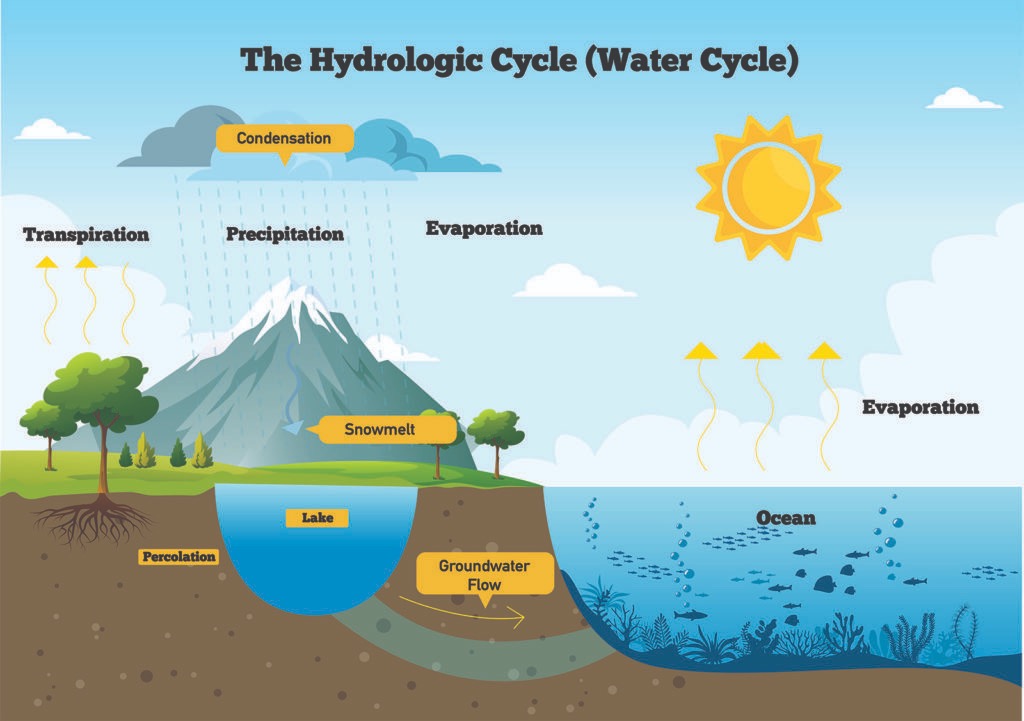
Now that you understand what a natural process is and how to structure your response, let us walk through each step in detail. Following this systematic approach will help you write a clear, well-organized answer that meets the examiners expectations for Band 7.0 and above.
Step 1: Analyze the Diagram Carefully
Leading sentence: Before you write anything, spend 2-3 minutes studying the diagram to understand the complete cycle.
When analyzing a natural process diagram, pay attention to:
- The number of stages – count how many steps are shown
- The starting and ending points – identify where the cycle begins and ends
- The relationships between stages – are they sequential, simultaneous, or branched?
- Visual clues – look for arrows showing direction and any labels provided
Important note for natural processes: Since natural cycles are circular, it does not matter where you start describing as long as you cover all stages clearly. You can begin with any logical point – for example, with the eggs, the adult, or any stage in between.
Step 2: Write the Introduction
Leading sentence: Your introduction should be a single sentence that paraphrases the task question without copying it directly.
Useful introduction phrases:
- “The diagram illustrates…”
- “The diagram shows…”
- “The diagram depicts…”
- “The process of… is shown in the diagram”
Example:
“The diagram illustrates the natural life cycle of a frog, from the fertilised egg stage to a fully developed adult amphibian.”
Step 3: Write the Overview
Leading sentence: The overview is the most important part of your response – it summarizes the entire process in 2-3 sentences.
Your overview should include:
- The type of process (natural/cyclical)
- The total number of stages
- The beginning and end of the cycle
Example:
“Overall, the life cycle of a frog consists of seven main stages, beginning with the laying of eggs and ending with the emergence of a mature adult frog ready to reproduce.”
Step 4: Write the Body Paragraphs
Leading sentence: Divide the body into two paragraphs, each describing a logical group of related stages.
For a cyclical natural process, you can:
- Paragraph 1: Describe the first half of the cycle (from the beginning to the middle stage)
- Paragraph 2: Describe the second half (from the middle stage to the end)
Using linking words: Connect the stages smoothly using sequential linkers such as firstly, initially, then, next, after that, subsequently, following this, finally.
Using active voice: Natural processes occur without human intervention, so use the active voice when describing each stage.
Example body paragraph:
“The cycle begins when the adult frog lays its eggs in a pond. Initially, the fertilised eggs develop into embryos, which then hatch into tadpoles. These tadpoles live among aquatic plants and gradually grow external gills and hind legs. Following this, the tadpoles use nutrients stored in their tails for further growth, and front legs begin to appear.”
Essential Vocabulary for Natural Process Writing Task 1
Having a strong vocabulary is crucial for describing natural processes accurately and achieving a high IELTS Lexical Resource score. The words and phrases you choose must be precise and appropriate for biological or environmental contexts.
Vocabulary for Describing Life Cycles
Leading sentence: Using precise biological vocabulary is essential for achieving a high Lexical Resource score in natural process tasks. Here are the key terms you need to know.
| Word/Phrase | Meaning | Example Usage |
| fertilised eggs | eggs that have been fertilized | The cycle begins with fertilised eggs. |
| embryo | early stage of development | The eggs develop into embryos. |
| hatch | to emerge from an egg | The embryos hatch into tadpoles. |
| larva / larvae | immature form of an animal | The larvae feed and grow. |
| tadpole | larval stage of a frog | The tadpole develops hind legs. |
| metamorphosis | transformation process | The tadpole undergoes metamorphosis. |
| mature / adult | fully developed stage | The tadpole matures into an adult frog. |
| reproduce | to produce offspring | Adult frogs reproduce by laying eggs. |
Vocabulary for Describing Natural Phenomena
Leading sentence: When describing weather or geological processes, these terms will help you express the stages accurately.
| Word/Phrase | Meaning | Example Usage |
| evaporate | to change from liquid to vapor | Water evaporates from the ocean surface. |
| condense | to change from vapor to liquid | Water vapor condenses to form clouds. |
| precipitate | to fall as rain or snow | Moisture precipitates as rainfall. |
| transpire | to release water vapor from plants | Plants transpire water into the atmosphere. |
| absorb | to take in | Roots absorb water from the soil. |
See also: IELTS Writing Task 1 Vocabulary: Words for High Band Scores
Sequential Linkers for Natural Process
Leading sentence: To achieve a high score in Coherence and Cohesion, you must use a variety of linking words to connect the stages smoothly.
| Stage | Linkers to Use |
| Starting | Initially, To begin with, The process commences with, At the first stage, Firstly |
| Continuing | Subsequently, Following this, After that, Next, Then, Once |
| Simultaneous | Meanwhile, Simultaneously, While this is happening |
| Ending | Finally, Lastly, At the final stage, The cycle is completed when |
Useful Phrases for Natural Process
Leading sentence: These phrases will help you describe the overall process and individual stages more naturally.
- “The process consists of [number] distinct stages…”
- “The cycle involves several developmental phases…”
- “The transformation from [stage A] to [stage B] takes approximately [time]…”
- “During this stage, [subject] undergoes [change]…”
- “The final outcome of this natural cycle is…”
Sample Natural Process Writing Task 1 Answer
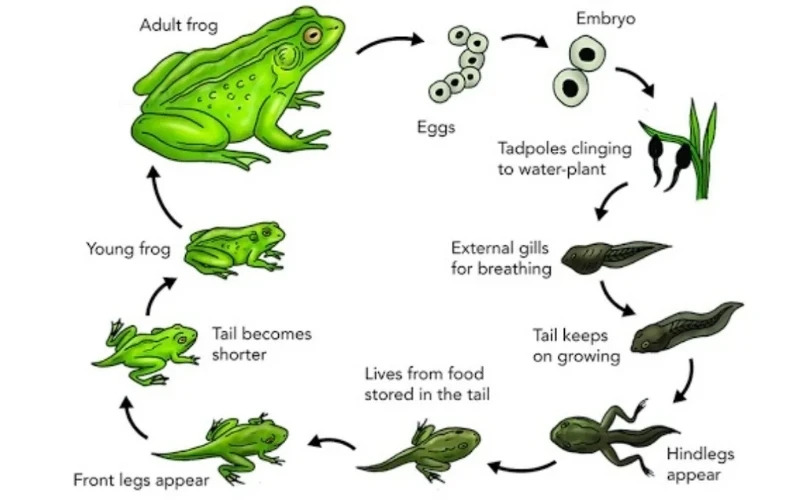
Now that you have learned the vocabulary, structure, and step-by-step approach, let us put everything together into a complete sample answer. The task below is a typical natural process question that asks you to describe the life cycle of a frog. Read through the sample response carefully and pay attention to how the introduction, overview, and body paragraphs are organized.
Task Prompt
The diagram below shows the life cycle of a frog. Summarise the information by selecting and reporting the main features, and make comparisons where relevant.
Sample Answer (Band 7.0+)
Introduction:
The diagram illustrates the natural life cycle of a frog, detailing its physical transformations from the egg stage to a fully developed adult amphibian.
Overview:
Overall, the frog undergoes a complex metamorphosis through seven distinct developmental phases, beginning with fertilised eggs and concluding with the emergence of a mature adult frog that is ready to reproduce.
Body Paragraph 1:
The cycle commences when adult frogs lay their eggs in a pond or other body of water. Initially, the fertilised eggs develop into embryos, which then hatch into small tadpoles. At this early stage, the tadpoles are black with long tails and live among aquatic plants. Subsequently, they grow external gills and develop hind legs, marking the first significant physical transformation.
Body Paragraph 2:
Following this, the tadpoles utilise nutrients stored in their tails for continued growth, during which front legs begin to appear and the tail gradually shrinks. Meanwhile, the tadpole undergoes further metamorphosis, developing into a young frog with four fully formed limbs. Finally, the young frog matures into an adult, its colour changing from black to dark green and then to bright green, completing the cycle.
Tips for Band 7.0+ in Natural Process Writing Task 1
Leading sentence: Follow these essential tips to maximize your score in natural process writing task 1.
Do:
- Use active voice – natural processes happen by themselves
- Use a variety of sequential linkers
- Include topic-specific vocabulary like embryo, tadpole, metamorphosis
- Write at least 150 words
- Describe every stage shown in the diagram
Don’t:
- Add personal opinions or extra information
- Use passive voice for natural processes
- Copy the task question word-for-word
- Skip the overview – it is essential for a high score
- Describe stages out of sequence
Conclusion
Natural process writing task 1 may seem challenging at first, but it follows a predictable structure that becomes easy to master with practice. The key principles are simple: use active voice, follow the sequence shown in the diagram, include topic-specific vocabulary, and never skip the overview.
IELTS Test Pro is your partner in IELTS success: Explore more sample answers, topic-specific vocabulary lists, and expert strategies. Start your journey to Band 7.0+ today!
