
Collocations for IELTS to Boosting Your Lexical Resource Score
If you are struggling with unnatural writing or stiff speaking in your IELTS test, the problem might not be your vocabulary size but your lack of collocations. Collocations for IELTS are the key difference between a Band 6.0 response and a Band 7.0+ performance.
Instead of learning individual words in isolation, mastering collocations helps you speak and write English fluently, accurately, and naturally – just like a native speaker. This comprehensive guide will provide you with the most important collocations you need to succeed in your IELTS exam.
See also: Idiom for IELTS Writing: Boost Your Band Score With Idiomatic Language
What Are Collocations for IELTS?
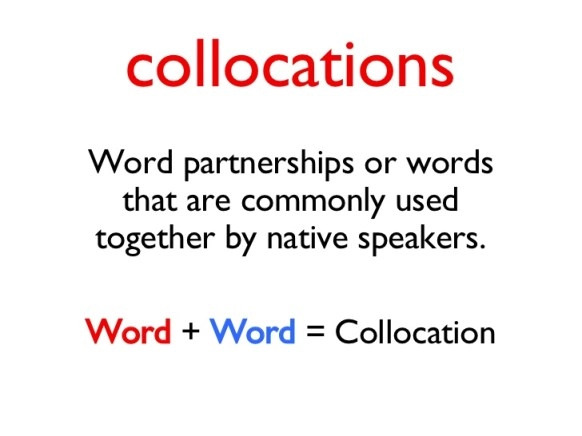
Before we dive into specific word combinations, let us first understand what collocations are and why they matter so much in learning and practicing IELTS.
Collocations are groups of words that frequently appear together in natural English. These are not strict grammar rules but rather the way native speakers naturally use language in everyday communication.
Common examples:
- We say make a decision (not do a decision)
- We say commit a crime (not make a crime)
- We say heavy rain (not strong rain)
- We say fast food (not quick food)
In the IELTS exam, using correct collocations demonstrates that you can use vocabulary flexibly and naturally. This directly impacts your IELTS Lexical Resource score in both Writing and Speaking.
Key point: Collocations are not just about knowing words – they are about knowing how words work together to create natural, native-like English.
Types of Collocations for IELTS
Understanding the different types of collocations will help you recognize and learn them more effectively. Here are the main categories you need to know for IELTS.
1. Adjective + Noun
This is one of the most common types of collocations. Certain adjectives naturally pair with specific nouns.
| Collocation | Meaning | Example |
| heavy traffic | a lot of vehicles on the road | There is heavy traffic during rush hour. |
| strong coffee | coffee with a bold flavor | I need a cup of strong coffee to wake up. |
| rapid growth | quick increase or development | The city has experienced rapid growth in recent years. |
| major issue | an important problem | Climate change is a major issue for governments. |
| key factor | an essential element | Education is a key factor in reducing poverty. |
2. Verb + Noun
These collocations are particularly important for IELTS Writing Task 2 and Speaking Part 3.
| Collocation | Meaning | Example |
| make a decision | to decide | The government must make a decision about public spending. |
| take responsibility | to accept accountability | Individuals should take responsibility for their actions. |
| conduct research | to carry out a study | Scientists conduct research on climate change. |
| pose a threat | to present a danger | Pollution poses a threat to public health. |
| reach a conclusion | to come to a decision | The committee reached a conclusion after careful analysis. |
| address an issue | to deal with a problem | The government must address the issue of unemployment. |
| implement a policy | to put a plan into action | Schools implement policies to reduce bullying. |
| overcome a challenge | to successfully deal with a difficulty | Many countries overcome challenges to achieve economic growth. |
| raise awareness | to increase knowledge about an issue | Campaigns raise awareness about environmental issues. |
| achieve a goal | to accomplish an objective | Students work hard to achieve their academic goals. |
3. Adverb + Adjective
These collocations add nuance and emphasis to your descriptions.
| Collocation | Meaning | Example |
| highly effective | very successful | The new teaching method is highly effective. |
| increasingly important | becoming more important | Technology is increasingly important in education. |
| extremely beneficial | very advantageous | Regular exercise is extremely beneficial for health. |
| widely accepted | accepted by many people | It is widely accepted that education reduces poverty. |
| deeply concerning | very worrying | The rise in unemployment is deeply concerning. |
4. Adverb + Verb
These collocations describe how an action is performed.
| Collocation | Meaning | Example |
| strongly believe | believe firmly | I strongly believe that education is essential. |
| slightly increase | increase by a small amount | The number of students slightly increased. |
| significantly improve | improve by a large amount | The new policy significantly improved living standards. |
5. Noun + Noun
These collocations are common in academic and formal writing.
| Collocation | Meaning | Example |
| exchange student | a student studying abroad | She was an exchange student in Japan. |
| job satisfaction | fulfillment from a job | Job satisfaction is linked to productivity. |
| work-life balance | balance between work and personal life | Many employees value work-life balance. |
Essential Collocations for IELTS Writing Task 2
Writing Task 2 requires formal, academic language. The collocations below will help you express your ideas more professionally and score higher in Lexical Resource.
Collocations for Expressing Opinions
| Collocation | Example in Context |
| hold a view | Many people hold the view that technology has improved our lives. |
| express concern | Experts express concern about climate change. |
| support the idea | I fully support the idea that education should be free. |
| oppose the notion | Some oppose the notion that technology is always beneficial. |
| strongly believe | I strongly believe that governments should invest in healthcare. |
Collocations for Discussing Arguments
When presenting and developing arguments in IELTS Writing Task 2, using precise collocations will make your position clearer and more persuasive. These verb-noun combinations are essential for academic writing and will help you express your ideas with greater sophistication.
| Collocation | Example in Context |
| put forward an argument | Critics put forward the argument that technology causes unemployment. |
| provide evidence | Research provides evidence that exercise improves mental health. |
| offer a solution | The government offered a solution to the housing crisis. |
| present a viewpoint | The article presents a viewpoint on environmental protection. |
| consider the implications | We must consider the implications of this policy. |
Collocations for Describing Causes and Effects
Being able to describe cause-and-effect relationships accurately is crucial for achieving a high score in IELTS Writing Task 2. The collocations below will help you express these connections naturally and academically without repeating the same phrases.
| Collocation | Example in Context |
| lead to | Unemployment leads to poverty and social unrest. |
| result in | The new policy resulted in significant improvements. |
| contribute to | Many factors contribute to climate change. |
| give rise to | Economic growth gives rise to higher living standards. |
| bring about | Technology has brought about significant changes. |
Collocations for Making Recommendations
In IELTS Writing Task 2, you are often asked to suggest solutions or make recommendations. Using these collocations will help you present your suggestions clearly and professionally.
| Collocation | Example in Context |
| take action | Governments must take action to reduce pollution. |
| implement measures | Schools should implement measures to prevent bullying. |
| address the problem | We must address the problem of inequality. |
| find a solution | Experts are trying to find a solution to this issue. |
| adopt a policy | Countries should adopt policies to protect the environment. |
Essential Collocations for IELTS Speaking
Speaking requires a more natural, conversational style while still maintaining some formality. Here are key collocations to use in your speaking test.
Collocations for Introducing Ideas
In IELTS Speaking, how you introduce your ideas is just as important as the ideas themselves. These collocations will help you present your opinions naturally and vary your language to avoid repetition.
| Collocation | Example in Context |
| in my opinion | In my opinion, education is the most important issue. |
| as far as I am concerned | As far as I am concerned, technology has mostly positive effects. |
| to my mind | To my mind, governments should invest more in healthcare. |
| speaking personally | Speaking personally, I prefer online learning to traditional classes. |
Collocations for Expressing Agreement and Disagreement
Expressing agreement or disagreement is a common task in IELTS Speaking Part 3. Using a variety of collocations will demonstrate your lexical range and make your responses more natural and engaging.
| Collocation | Example in Context |
| agree strongly | I agree strongly with the idea that education is essential. |
| partly agree | I partly agree with the argument that technology causes unemployment. |
| disagree entirely | I disagree entirely with the notion that money buys happiness. |
| hold a different view | I hold a different view on this matter. |
Collocations for Giving Examples
Providing relevant examples is essential for developing your ideas in IELTS Speaking. These collocations will help you introduce examples smoothly and naturally.
| Collocation | Example in Context |
| for instance | For instance, Japan has invested heavily in renewable energy. |
| such as | Many countries, such as Germany and Norway, have adopted green policies. |
| take for example | Take, for example, the case of Singapore. |
Collocations for Concluding
A strong conclusion leaves a positive impression on the examiner. These collocations will help you summarize your ideas clearly and end your responses confidently.
| Collocation | Example in Context |
| in conclusion | In conclusion, education is the key to a prosperous society. |
| to summarize | To summarize, technology has both positive and negative effects. |
| on balance | On balance, the benefits of technology outweigh the drawbacks. |
Essential Collocations for IELTS Listening
Collocations are not just for writing and speaking – they also play a crucial role in IELTS Listening. Recognizing these common collocations helps you predict answers and understand the speaker more quickly, especially when information is rephrased.
| Collocation | Meaning | Context Example |
| make a note | to write down | She made a note of the important points. |
| take an exam | to sit for a test | They will take the exam next week. |
| pay attention | to focus | Students should pay attention in class. |
| keep a record | to maintain documentation | The company keeps a record of all transactions. |
| follow instructions | to obey directions | It is important to follow instructions carefully. |
Quick tip: When listening for answers, remember that IELTS often rephrases information using collocations. For example, the speaker might say “the population grew rapidly” while the answer expects “rapid growth.”
Topic-Specific Collocations for IELTS
Many IELTS topics reappear regularly. Here are collocations organized by common topics to help you prepare effectively.
Education Collocations
Education is one of the most frequently tested topics in IELTS Writing and Speaking. Mastering these collocations will help you discuss educational issues with precision and confidence.
| Collocation | Meaning | Example |
| pursue higher education | to continue studying after school | Many students pursue higher education to improve their careers. |
| attend a lecture | to go to a class | He attended a lecture on environmental science. |
| achieve academic success | to perform well in studies | Hard work helps students achieve academic success. |
| enroll in a course | to register for a class | She enrolled in a course to improve her English. |
| acquire knowledge | to gain information | Students acquire knowledge through reading and practice. |
Technology Collocations
Technology appears regularly in IELTS topics, from education and work to communication and the environment. These collocations will help you discuss technological issues naturally and precisely.
| Collocation | Meaning | Example |
| technological advancement | progress in technology | Technological advancements have changed our lives. |
| digital divide | gap in technology access | The digital divide affects disadvantaged communities. |
| cutting-edge technology | the most advanced technology | The company uses cutting-edge technology. |
| cyber security | protection from online threats | Cybersecurity is a growing concern. |
| online platform | a website or application | Many businesses sell products through online platforms. |
Environment Collocations
Environmental topics are almost guaranteed to appear in IELTS exams. These collocations will help you discuss climate change, pollution, and sustainability with accuracy and sophistication.
| Collocation | Meaning | Example |
| renewable energy | energy from natural sources | Governments should invest in renewable energy. |
| carbon emissions | release of carbon dioxide | We must reduce carbon emissions. |
| climate change | long-term weather changes | Climate change is the most serious issue today. |
| environmental protection | actions to preserve nature | Environmental protection requires international cooperation. |
| sustainable development | eco-friendly growth | Sustainable development is essential for future generations. |
Health Collocations
Health and well-being are recurring themes in IELTS, especially in discussions about lifestyle, healthcare systems, and public policy. These collocations will help you express ideas about health accurately.
| Collocation | Meaning | Example |
| balanced diet | a healthy eating plan | A balanced diet is important for health. |
| physical activity | exercise | Regular physical activity improves mental health. |
| mental health | emotional well-being | Mental health is as important as physical health. |
| public health | health of the population | Public health campaigns prevent disease. |
| healthcare system | the organization of medical care | Many countries have improved their healthcare systems. |
Work and Employment Collocations
Work-related topics appear frequently in IELTS essays and speaking questions. These collocations will help you discuss employment, career progression, and workplace issues with confidence.
| Collocation | Meaning | Example |
| work-life balance | balance between work and personal time | Work-life balance is important for well-being. |
| job satisfaction | happiness at work | Job satisfaction leads to higher productivity. |
| career advancement | progress in a career | Professional development helps with career advancement. |
| job security | stability of employment | Many workers value job security over a high salary. |
| skilled workforce | workers with specialized training | A skilled workforce is vital for economic growth. |
Government and Society Collocations
Many IELTS essay questions ask about the role of government in society. These collocations will help you discuss public policy, social welfare, and urban development with precision.
| Collocation | Meaning | Example |
| public expenditure | government spending | Public expenditure on infrastructure creates jobs. |
| social welfare | programs that help citizens | Social welfare helps disadvantaged groups. |
| economic growth | increase in a country’s wealth | Economic growth requires investment in education. |
| quality of life | overall well-being | Urban planning affects quality of life. |
| public services | services provided by the government | Public services such as transportation are essential. |
Common Collocation Mistakes to Avoid
Many IELTS candidates lose marks unnecessarily because they use incorrect collocations. Here are some of the most common errors to avoid – learning these corrections will instantly improve the naturalness of your language.
| Incorrect Collocation | Correct Collocation | Explanation |
| do a decision | make a decision | Make is the correct verb |
| make research | conduct research | Conduct is the correct verb |
| take responsibility | take responsibility is already correct | |
| have a role | play a role | Play is the correct verb |
| increase awareness | raise awareness | Raise is the correct verb |
| make a threat | pose a threat | Pose is the correct verb |
| complete a goal | achieve a goal | Achieve is the correct verb |
| get experience | gain experience | Gain is more formal |
| solve with a problem | tackle a problem | Tackle is the correct verb |
| make an impact to | have an impact on | Have an impact on is correct |
How to Learn Collocations for IELTS Effectively
Learning collocations is different from memorizing individual vocabulary words. Here are effective strategies to help you master collocations for IELTS.
Strategy 1: Learn Vocabulary in Chunks
Instead of learning individual words, learn them as part of phrases. For example, instead of learning awareness, learn raise awareness. Instead of learning research, learn conduct research. This approach makes your language sound more natural.
Strategy 2: Read Extensively in English
Reading newspapers, academic articles, and sample essays exposes you to natural collocations in context. Pay attention to how words combine in different situations. When you see an interesting collocation, write it down with the full sentence.
Strategy 3: Keep a Collocation Notebook
Create a dedicated notebook or digital document to record collocations. Organize them by type or by topic so you can review them easily. Include example sentences to see how each collocation is used in context.
Strategy 4: Practice Using Collocations in Writing and Speaking
Passive knowledge is not enough – you must actively use new collocations. Set a goal to use 3-5 new collocations in each writing practice session. Record yourself speaking and listen back to check if you are using collocations naturally.
Strategy 5: Use an English-English Dictionary
A good learner’s dictionary will often show you which words naturally go together. Look for phrases like “often used with…” or “collocates with…” to discover natural word combinations.
Strategy 6: Practice Paraphrasing
Take a simple sentence and rewrite it using different collocations. This helps you develop flexibility and avoid repetition. For example, “The government will spend more money” can become “The government will allocate more funds.”
Strategy 7: Review Regularly
Spaced repetition is effective for learning collocations. Review your vocabulary notebook at regular intervals to move new collocations from short-term to long-term memory.
Đọc thêm: How to Paraphrase in IELTS to Boost Your Band Score?
Conclusion
Mastering collocations for IELTS is one of the most effective ways to boost your Lexical Resource score and sound more natural in both Writing and Speaking. By learning words in chunks rather than isolation, you will express ideas more fluently, avoid common errors, and impress examiners with your precise vocabulary use.
Explore more vocabulary resources, sample answers, and expert strategies at IELTS Test Pro. Start your journey to Band 7.0+ today!
