
Education IELTS Topic Vocabulary: 150+ Words To Know
Education is one of the most common topics in the IELTS exam. Whether you are preparing for IELTS Writing Task 2 or Speaking Part 3, having a strong vocabulary related to education can significantly improve your band score. IELTS Test Pro provides a comprehensive list of 150+ Education IELTS topic vocabulary, organized into clear categories to help you learn and apply them effectively.
I. 150+ education IELTS topic vocabulary
Below is a carefully selected list of 150+ IELTS Education topic vocabulary, categorized into key groups to help you learn, remember, and apply them effectively in both Writing and Speaking.
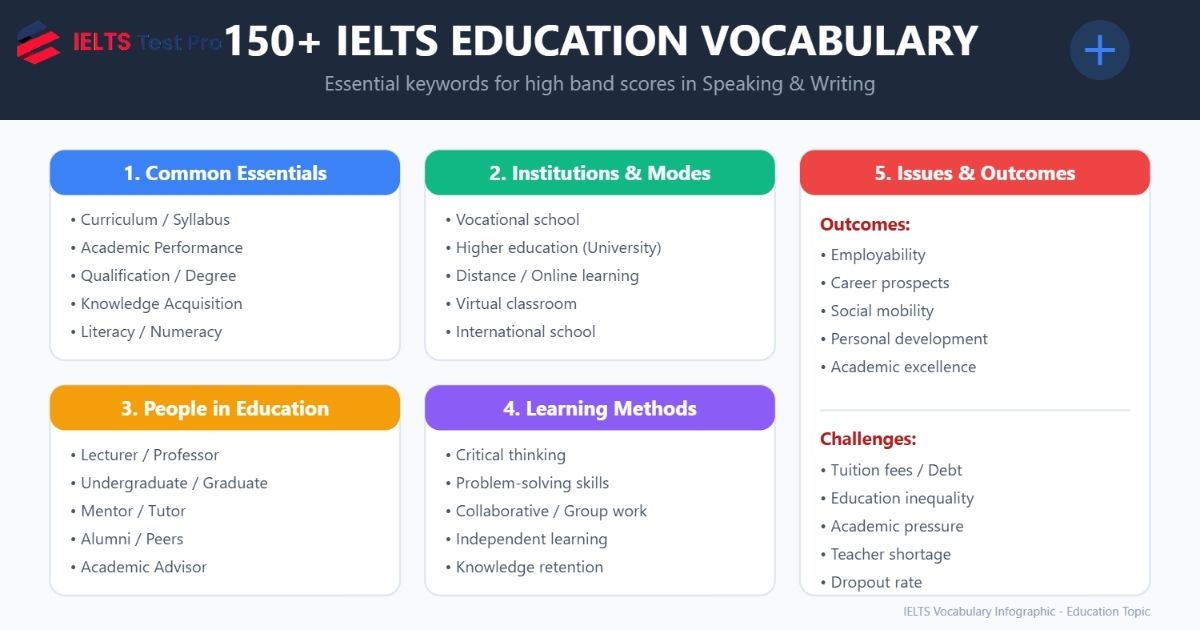
1. Common education vocabulary
| Education IELTS topic vocabulary | IPA | Example |
| Education system | /ˌedʒʊˈkeɪʃn ˈsɪstəm/ | A strong education system supports economic growth. |
| Curriculum | /kəˈrɪkjʊləm/ | The curriculum should meet modern demands. |
| Syllabus | /ˈsɪləbəs/ | The syllabus outlines course content. |
| Academic year | /ˌækəˈdemɪk jɪə(r)/ | The academic year is divided into terms. |
| Subject | /ˈsʌbdʒɪkt/ | Students should choose suitable subjects. |
| Discipline | /ˈdɪsəplɪn/ | Discipline ensures effective learning. |
| Qualification | /ˌkwɒlɪfɪˈkeɪʃn/ | Qualifications improve job opportunities. |
| Certificate | /səˈtɪfɪkət/ | A certificate proves competence. |
| Diploma | /dɪˈpləʊmə/ | He obtained a diploma in IT. |
| Degree | /dɪˈɡriː/ | A degree is essential for many careers. |
| Academic performance | /ˌækəˈdemɪk pəˈfɔːməns/ | Performance depends on study habits. |
| Literacy | /ˈlɪtərəsi/ | Literacy is a basic requirement. |
| Numeracy | /ˈnjuːmərəsi/ | Numeracy skills are important. |
| Knowledge | /ˈnɒlɪdʒ/ | Education helps students gain knowledge. |
| Skill | /skɪl/ | Skills are essential for employment. |
| Competence | /ˈkɒmpɪtəns/ | Competence is valued in the workplace. |
| Academic standard | /ˌækəˈdemɪk ˈstændəd/ | Schools must maintain standards. |
| Education policy | /ˌedʒʊˈkeɪʃn ˈpɒləsi/ | Governments should reform education policy. |
| Schooling | /ˈskuːlɪŋ/ | Schooling is compulsory in many countries. |
| Formal education | /ˈfɔːml ˌedʒʊˈkeɪʃn/ | Formal education shapes individuals. |
| Informal learning | /ɪnˈfɔːml ˈlɜːnɪŋ/ | Informal learning occurs outside school. |
| Academic background | /ˌækəˈdemɪk ˈbækɡraʊnd/ | Employers consider academic background. |
| Intellectual ability | /ˌɪntəˈlektʃuəl əˈbɪləti/ | Education develops intellectual ability. |
| Educational development | /ˌedʒʊˈkeɪʃnəl dɪˈveləpmənt/ | Development improves society. |
| Learning process | /ˈlɜːnɪŋ ˈprəʊses/ | The learning process varies by student. |
| Academic field | /ˌækəˈdemɪk fiːld/ | Students specialize in a field. |
| Knowledge acquisition | /ˈnɒlɪdʒ ˌækwɪˈzɪʃn/ | Learning involves knowledge acquisition. |
| Educational framework | /ˌedʒʊˈkeɪʃnəl ˈfreɪmwɜːk/ | A clear framework improves outcomes. |
| Learning objectives | /ˈlɜːnɪŋ əbˈdʒektɪvz/ | Objectives guide teaching. |
| Academic success | /ˌækəˈdemɪk səkˈses/ | Hard work leads to success. |
2. Types of education & institutions
| Education IELTS topic vocabulary | IPA | Example |
| Primary school | /ˈpraɪməri skuːl/ | Children learn basics in primary school. |
| Secondary school | /ˈsekəndri skuːl/ | Secondary school prepares students for exams. |
| High school | /ˈhaɪ skuːl/ | Students face pressure in high school. |
| University | /ˌjuːnɪˈvɜːsəti/ | University develops critical thinking. |
| College | /ˈkɒlɪdʒ/ | College offers further education. |
| Vocational school | /vəʊˈkeɪʃənl skuːl/ | Vocational schools teach practical skills. |
| Boarding school | /ˈbɔːdɪŋ skuːl/ | Boarding schools build independence. |
| Private school | /ˈpraɪvət skuːl/ | Private schools offer better facilities. |
| Public school | /ˈpʌblɪk skuːl/ | Public schools are government-funded. |
| Training center | /ˈtreɪnɪŋ ˈsentə(r)/ | Workers attend training centers. |
| Institution | /ˌɪnstɪˈtjuːʃn/ | Institutions shape society. |
| Higher education | /ˈhaɪə ˌedʒʊˈkeɪʃn/ | Higher education improves prospects. |
| Distance learning | /ˈdɪstəns ˈlɜːnɪŋ/ | Distance learning offers flexibility. |
| Online learning | /ˈɒnlaɪn ˈlɜːnɪŋ/ | Online learning is increasingly popular. |
| E-learning | /ˈiː ˈlɜːnɪŋ/ | E-learning allows remote study. |
| Virtual classroom | /ˈvɜːtʃuəl ˈklɑːsruːm/ | Virtual classrooms enable interaction. |
| Digital platform | /ˈdɪdʒɪtl ˈplætfɔːm/ | Platforms deliver content online. |
| Remote education | /rɪˈməʊt ˌedʒʊˈkeɪʃn/ | Remote education increases access. |
| Academic institution | /ˌækəˈdemɪk ˌɪnstɪˈtjuːʃn/ | Institutions provide education. |
| Technical school | /ˈteknɪkl skuːl/ | Technical schools teach skills. |
| Adult education | /ˈædʌlt ˌedʒʊˈkeɪʃn/ | Adults continue learning. |
| Continuing education | /kənˈtɪnjuːɪŋ ˌedʒʊˈkeɪʃn/ | Lifelong learning is essential. |
| Special education | /ˈspeʃl ˌedʒʊˈkeɪʃn/ | Special education supports disabilities. |
| International school | /ˌɪntəˈnæʃnəl skuːl/ | International schools follow global curricula. |
| Language school | /ˈlæŋɡwɪdʒ skuːl/ | Students learn foreign languages. |
| Education center | /ˌedʒʊˈkeɪʃn ˈsentə/ | Centers provide extra classes. |
| Academy | /əˈkædəmi/ | Academies focus on excellence. |
| Learning hub | /ˈlɜːnɪŋ hʌb/ | A hub supports collaboration. |
| Study abroad | /ˈstʌdi əˈbrɔːd/ | Many students study abroad. |
| Exchange program | /ɪksˈtʃeɪndʒ ˈprəʊɡræm/ | Exchange programs broaden experience. |
3. People in education
| Education IELTS topic vocabulary | IPA | Example |
| Student | /ˈstjuːdnt/ | Students must be responsible. |
| Pupil | /ˈpjuːpl/ | Pupils need guidance. |
| Learner | /ˈlɜːnə(r)/ | Learners adapt to change. |
| Teacher | /ˈtiːtʃə(r)/ | Teachers inspire students. |
| Lecturer | /ˈlektʃərə(r)/ | Lecturers teach at university. |
| Professor | /prəˈfesə(r)/ | Professors conduct research. |
| Tutor | /ˈtjuːtə(r)/ | Tutors support learning. |
| Educator | /ˈedʒukeɪtə(r)/ | Educators use teaching methods. |
| Principal | /ˈprɪnsəpl/ | The principal manages schools. |
| Graduate | /ˈɡrædʒuət/ | Graduates seek jobs. |
| Undergraduate | /ˌʌndəˈɡrædʒuət/ | Undergraduates study for degrees. |
| Postgraduate | /ˌpəʊstˈɡrædʒuət/ | Postgraduates specialize further. |
| Academic advisor | /ədˈvaɪzə/ | Advisors guide students. |
| Supervisor | /ˈsuːpəvaɪzə/ | Supervisors assist research. |
| Researcher | /rɪˈsɜːtʃə/ | Researchers publish papers. |
| Scholar | /ˈskɒlə/ | Scholars contribute knowledge. |
| Candidate | /ˈkændɪdət/ | Candidates apply for programs. |
| Applicant | /ˈæplɪkənt/ | Applicants submit forms. |
| Alumni | /əˈlʌmnaɪ/ | Alumni support institutions. |
| Classmate | /ˈklɑːsmeɪt/ | Classmates study together. |
| Peer | /pɪə/ | Peer learning is effective. |
| Instructor | /ɪnˈstrʌktə/ | Instructors teach skills. |
| Mentor | /ˈmentɔː/ | Mentors guide development. |
| Examiner | /ɪɡˈzæmɪnə/ | Examiners assess students. |
| Invigilator | /ɪnˈvɪdʒɪleɪtə/ | Invigilators supervise exams. |
| Dean | /diːn/ | The dean manages faculty. |
| Headmaster | /ˌhedˈmɑːstə/ | The headmaster leads schools. |
| Headteacher | /ˌhedˈtiːtʃə/ | The headteacher ensures standards. |
| Trainer | /ˈtreɪnə/ | Trainers develop skills. |
| Facilitator | /fəˈsɪlɪteɪtə/ | Facilitators guide discussions. |
4. Learning methods & academic activities
| Education IELTS topic vocabulary | IPA | Example |
| Study | /ˈstʌdi/ | Students study daily. |
| Revise | /rɪˈvaɪz/ | Revising improves retention. |
| Memorize | /ˈmeməraɪz/ | Memorizing is limited. |
| Analyze | /ˈænəlaɪz/ | Students analyze data. |
| Evaluate | /ɪˈvæljueɪt/ | Evaluate arguments carefully. |
| Research | /rɪˈsɜːtʃ/ | Research develops knowledge. |
| Attend classes | /əˈtend/ | Attendance improves learning. |
| Take notes | /teɪk nəʊts/ | Notes support revision. |
| Do assignments | /duː/ | Assignments build skills. |
| Group work | /ɡruːp wɜːk/ | Group work builds teamwork. |
| Self-study | /self ˈstʌdi/ | Self-study is essential. |
| Critical thinking | /ˈkrɪtɪkl/ | Critical thinking is key. |
| Problem-solving | /ˈprɒbləm/ | Problem-solving is valuable. |
| Brainstorming | /ˈbreɪnstɔːmɪŋ/ | Brainstorming generates ideas. |
| Discussion | /dɪˈskʌʃn/ | Discussions improve understanding. |
| Presentation | /ˌpreznˈteɪʃn/ | Presentations build confidence. |
| Lecture | /ˈlektʃə/ | Lectures deliver content. |
| Seminar | /ˈsemɪnɑː/ | Seminars involve discussion. |
| Workshop | /ˈwɜːkʃɒp/ | Workshops develop skills. |
| Independent learning | /ˌɪndɪˈpendənt/ | Independence is important. |
| Peer learning | /pɪə/ | Peer learning is effective. |
| Interactive learning | /ˌɪntərˈæktɪv/ | Interactive learning engages students. |
| Practical training | /ˈpræktɪkl/ | Training prepares for work. |
| Skill development | /skɪl/ | Skills improve employability. |
| Knowledge retention | /rɪˈtenʃn/ | Revision aids retention. |
| Time management | /taɪm/ | Time management is essential. |
| Exam preparation | /ɪɡˈzæm/ | Preparation leads to success. |
| Learning strategy | /ˈstrætədʒi/ | Strategies improve outcomes. |
| Study plan | /plæn/ | A plan helps organization. |
| Academic practice | /ˌækəˈdemɪk/ | Practice improves performance. |
5. Exams, issues & educational outcomes
| Education IELTS topic vocabulary | IPA | Example |
| Examination | /ɪɡˌzæmɪˈneɪʃn/ | Exams assess knowledge. |
| Assessment | /əˈsesmənt/ | Assessment tracks progress. |
| Evaluation | /ɪˌvæljuˈeɪʃn/ | Evaluation ensures fairness. |
| Grading system | /ˈɡreɪdɪŋ/ | Systems must be fair. |
| Band score | /bænd/ | IELTS requires high scores. |
| Pass mark | /pɑːs/ | Students must pass. |
| Distinction | /dɪˈstɪŋkʃn/ | Few achieve distinction. |
| Retake | /ˌriːˈteɪk/ | Students may retake exams. |
| Tuition fees | /tjuːˈɪʃn/ | Fees are increasing. |
| Education inequality | /ˌɪnɪˈkwɒləti/ | Inequality affects access. |
| Dropout rate | /ˈdrɒpaʊt/ | Rates should be reduced. |
| Teacher shortage | /ˈʃɔːtɪdʒ/ | Shortages affect quality. |
| Lack of resources | /rɪˈzɔːsɪz/ | Resources are limited. |
| Overcrowded classrooms | /ˌəʊvəˈkraʊdɪd/ | Classes affect focus. |
| Academic pressure | /ˈpreʃə/ | Pressure impacts students. |
| Stress | /stres/ | Exams cause stress. |
| Motivation | /ˌməʊtɪˈveɪʃn/ | Motivation drives success. |
| Learning outcome | /ˈaʊtkʌm/ | Outcomes measure success. |
| Academic achievement | /əˈtʃiːvmənt/ | Achievement depends on effort. |
| Employability | /ɪmˌplɔɪəˈbɪləti/ | Skills improve employability. |
| Career prospects | /prɒspekts/ | Education improves prospects. |
| Job opportunities | /ˈɒpətjuːnətiz/ | Education creates opportunities. |
| Workforce | /ˈwɜːkfɔːs/ | Education develops workforce. |
| Skill gap | /ɡæp/ | There is a skill gap. |
| Lifelong learning | /ˈlaɪflɒŋ/ | Learning continues forever. |
| Social mobility | /ˌməʊˈbɪləti/ | Education improves mobility. |
| Personal development | /dɪˈveləpmənt/ | Education develops individuals. |
| Innovation | /ˌɪnəˈveɪʃn/ | Education fosters innovation. |
| Creativity | /ˌkriːeɪˈtɪvəti/ | Creativity is important. |
| Critical skills | /ˈkrɪtɪkl/ | Skills are essential. |
| Professional skills | /prəˈfeʃənl/ | Skills aid careers. |
| Job readiness | /ˈredinəs/ | Graduates need readiness. |
| Academic excellence | /ˈeksələns/ | Excellence is rewarded. |
| Educational success | /səkˈses/ | Success depends on effort. |
| Career development | /dɪˈveləpmənt/ | Education supports careers. |
See also: 75+ Synonyms & Antonyms for IELTS Writing & Speaking
II. How to Use Education Vocabulary in IELTS Writing
Using advanced vocabulary alone is not enough to achieve a high band score in IELTS Writing. You need to use words accurately, naturally, and in the right context. Below are some important strategies to help you apply education-related vocabulary effectively.
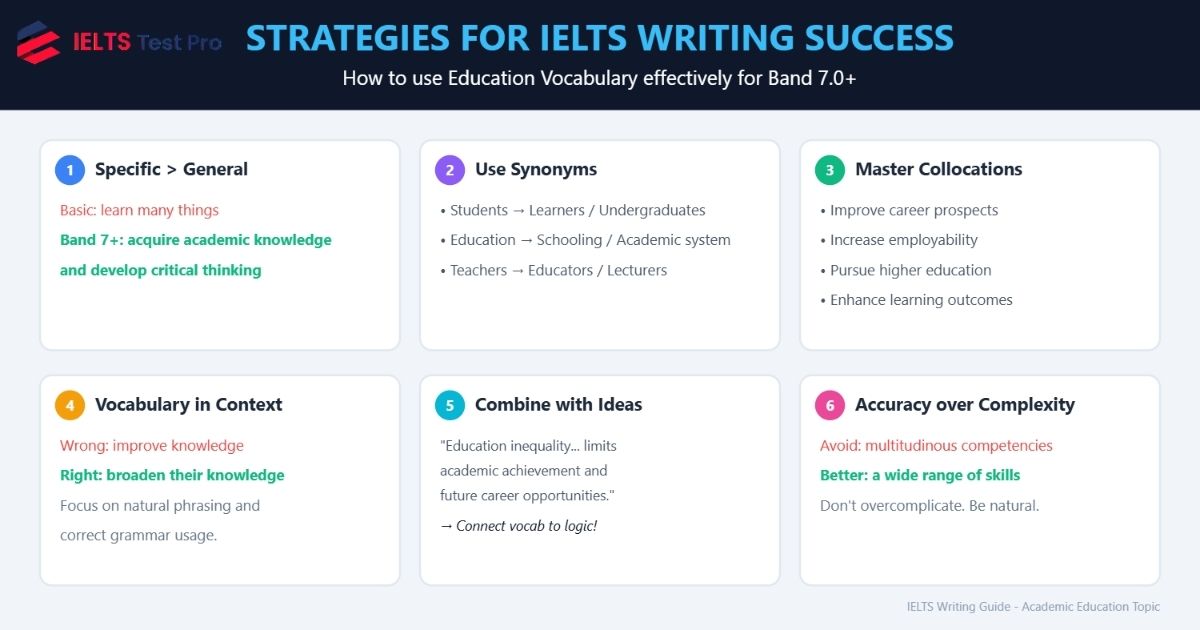
Tip 1: Use topic-specific vocabulary instead of general words
Many students lose marks because they rely on simple, general words such as learn, study, or things. To improve your education IELTS topic vocabulary, you should replace them with more precise, topic-related vocabulary.
Example:
- Basic: Students learn many things at school.
- Improved: Students acquire knowledge and develop essential skills at school.
- Band 7+: Students acquire academic knowledge and develop critical thinking skills through formal education.
Using specific terms like academic knowledge, practical skills, or critical thinking makes your writing more formal and relevant to the topic.
Tip 2: Avoid repetition by using synonyms
Repeating the same education IELTS topic vocabulary (e.g., education, students, school) too many times can lower your score. Instead, you should use appropriate synonyms to make your writing more varied and cohesive. Examples:
- education → schooling / academic system / formal education
- students → learners / pupils / undergraduates
- teachers → educators / instructors / lecturers
Example in a sentence:
- Repetitive: Education is important because education helps students get better jobs.
- Improved: Education is important because it helps learners improve their career prospects.
This shows the examiner that you have a wide range of vocabulary and can use it flexibly.
Tip 3: Use collocations naturally
Collocations (words that commonly go together) are essential for achieving a high band score. Instead of using single words, you should learn and apply them in phrases. Common education collocations:
- improve career prospects
- increase employability
- pursue higher education
- gain qualifications
- develop skills
- enhance learning outcomes
Example:
- Basic: Education helps people get jobs.
- Improved: Education can significantly improve career prospects and increase employability.
Using collocations makes your writing sound more natural and academic.
Tip 4: Use vocabulary in context, not in isolation
Memorizing word lists education IELTS topic vocabulary is not enough. You need to understand how to use vocabulary correctly in sentences and ideas. Example:
- Incorrect use: Students improve knowledge in school.
- Correct use: Students broaden their knowledge through formal education.
You should always focus on:
- correct grammar
- natural phrasing
- appropriate context
Tip 5: Combine vocabulary with ideas
High-scoring essays are not only about vocabulary but also about how you develop ideas. Try to combine topic vocabulary with clear arguments. Example:
Education inequality is a serious issue because students from disadvantaged backgrounds often lack access to quality schooling, which limits their academic achievement and future career opportunities.
This type of sentence shows:
- topic vocabulary (education inequality, access to schooling)
- clear reasoning
- academic tone
Tip 6: Avoid Overusing Complex Words
Using too many difficult education IELTS topic vocabulary words incorrectly can reduce your score. Accuracy is more important than complexity. Example:
- Overcomplicated (incorrect): Education facilitates multitudinous competencies expansion.
- Natural (better): Education helps students develop a wide range of skills.
III. IELTS Writing band 7+ sample essay about Education
Topic: Some people believe that education should focus on practical skills rather than academic knowledge. Discuss both views.
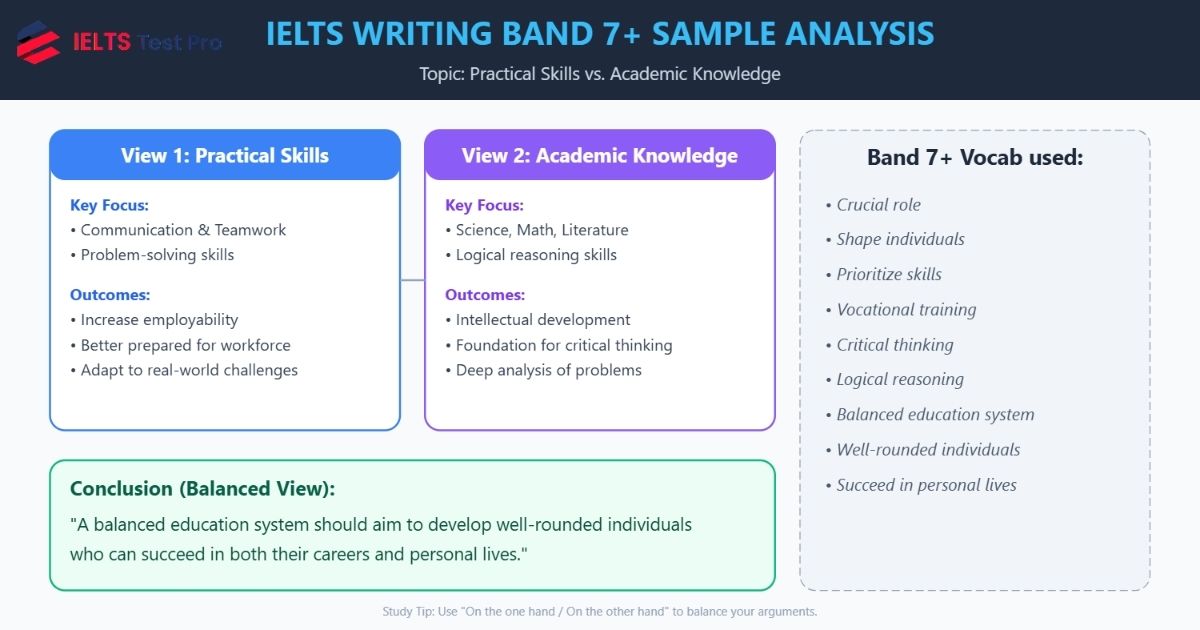
Sample Answer (Band 7+):
Education plays a crucial role in shaping individuals and society. While some argue that schools should prioritize practical skills, others believe that academic knowledge is equally important.
On the one hand, practical skills such as communication, teamwork, and problem-solving can significantly increase employability. Students who receive vocational training are often better prepared for the workforce and can adapt quickly to real-world challenges.
On the other hand, academic knowledge provides a strong foundation for critical thinking and intellectual development. Subjects like science and mathematics help learners analyze problems and develop logical reasoning skills.
In conclusion, both practical skills and academic knowledge are essential. A balanced education system should aim to develop well-rounded individuals who can succeed in both their careers and personal lives.
Read more: IELTS Writing Tips: The Ultimate Guide for Beginners
Conclusion
Mastering education IELTS topic vocabulary is essential for achieving a high band score in both Writing and Speaking. By learning vocabulary in categorized lists, you can improve not only your lexical resource but also your ability to express ideas clearly and effectively. Focus on understanding how to use these words in context, combine them with collocations, and apply them naturally in your answers. Start practicing now on IELTS Test Pro and take your IELTS preparation to the next level!