
IELTS Writing Task 1 Topics: Complete Guide to All Common Question Types
IELTS Writing Task 1 Topics are one of the first things candidates should understand before preparing for the Academic Writing test. Many learners struggle with Task 1 not because of grammar or vocabulary, but because they fail to recognize the question type and apply the correct writing strategy.
In this guide, IELTS Test Pro will help you understand the most common IELTS Writing Task 1 topics, how they are classified, and the best approach for each type.
What Are IELTS Writing Task 1 Topics?
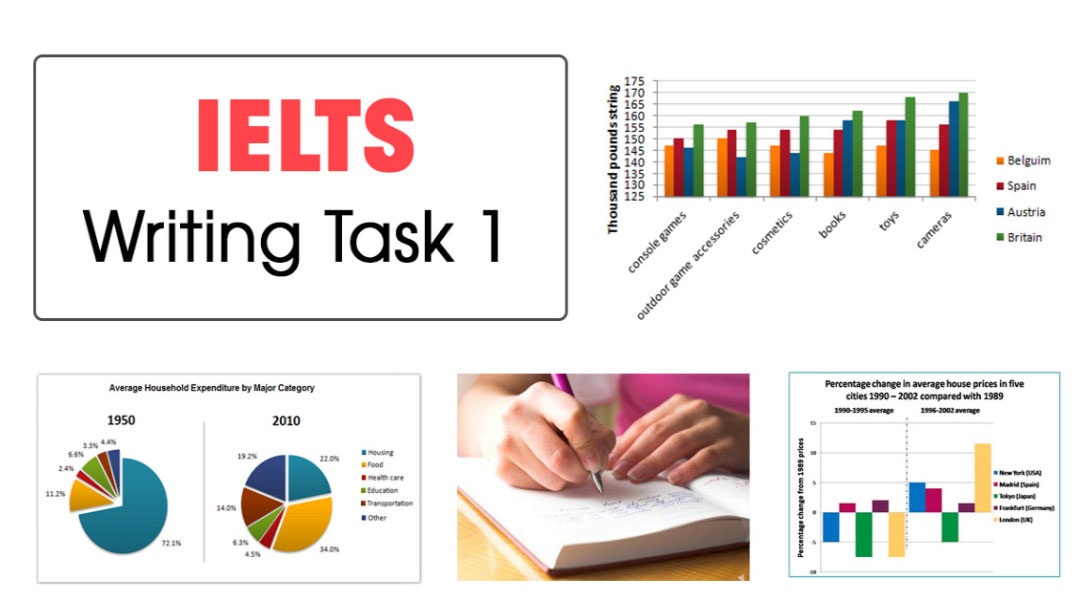
In the Academic IELTS exam, Writing Task 1 requires candidates to describe visual information in at least 150 words. The information may be presented in the form of charts, graphs, tables, maps, or diagrams.
Unlike Task 2, you are not asked to give opinions. Instead, your goal is to summarize, compare, and report key features accurately.
The most common IELTS Writing Task 1 topics can be grouped into five major categories:
- Line Graph
- Bar Chart
- Pie Chart
- Table
- Map
- Process Diagram
Understanding these categories helps you identify the correct structure, vocabulary, and writing strategy more quickly during the exam.
See also: Paraphrase IELTS Writing Task 1
Types of IELTS Writing Task 1 Topics
One of the biggest mistakes candidates make is treating all IELTS Writing Task 1 topics the same way. In reality, each question type has its own structure, vocabulary, and key features that examiners expect you to describe.
1. Line Graph
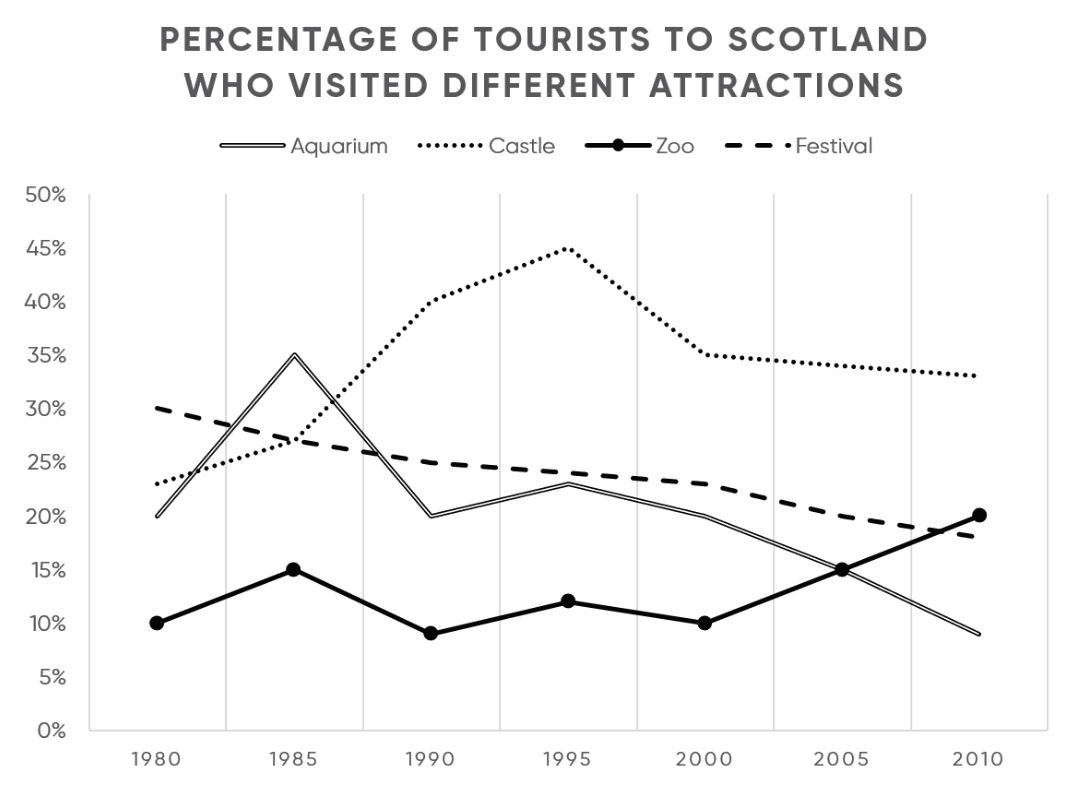
Line graphs are among the most common IELTS Writing Task 1 topics and are used to show how data changes over a period of time. The information is presented through one or more lines, allowing candidates to identify trends, compare changes, and describe developments across different years, months, or decades.
Common topics include:
- Population growth
- Sales figures
- Energy consumption
- Employment rates
- Tourist numbers
When answering line graph questions, your main task is to identify overall trends rather than describe every data point. Pay attention to significant increases, decreases, fluctuations, peaks, and periods where figures remain stable.
Example:
The graph below shows the number of international tourists visiting a country between 2000 and 2025.
2. Bar Chart
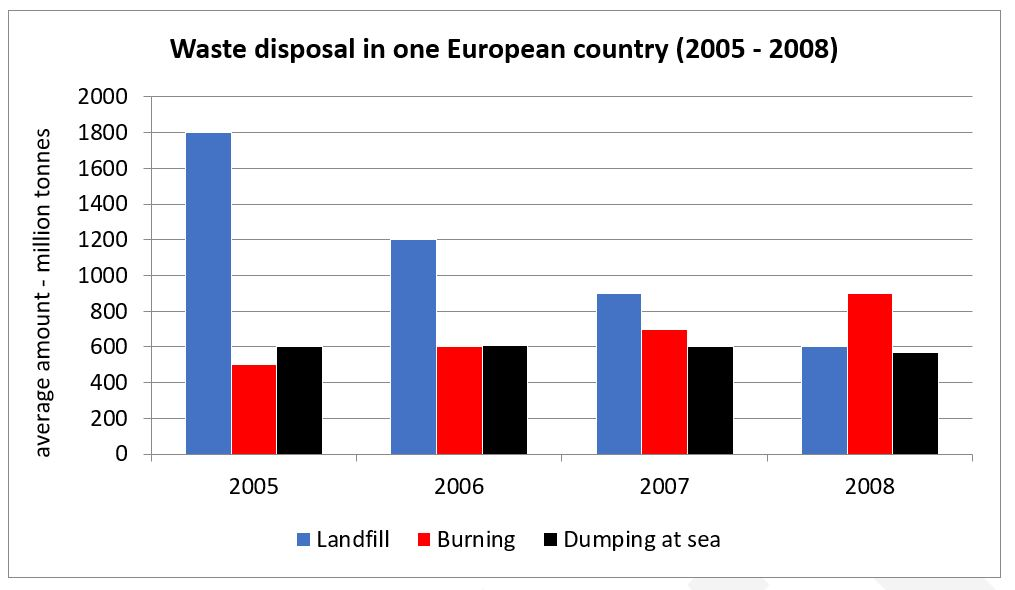
Bar charts are designed to compare information across different categories, groups, locations, or time periods. Unlike line graphs, which focus on trends over time, bar charts often emphasize differences and similarities between figures.
Common topics include:
- Transportation preferences
- Consumer spending habits
- Educational statistics
- Household activities
- Internet usage
When describing a bar chart, focus on the most noticeable comparisons. Identify which categories have the highest and lowest figures, as well as any significant gaps or similarities between them. Avoid reporting every number individually.
Example:
The chart below shows the percentage of people using different forms of transportation in four cities.
3. Pie Chart
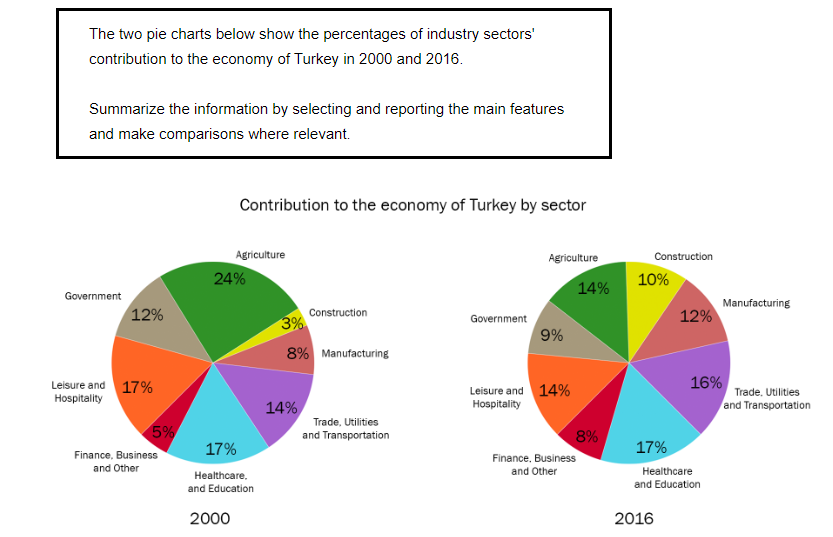
Pie charts illustrate proportions and percentages, showing how a whole is divided into different parts. They are commonly used to present distributions, allocations, or shares within a particular category.
Typical topics include:
- Market share
- Household spending
- Sources of energy
- Company revenue
- Budget allocation
The key to writing a strong pie chart response is identifying the largest and smallest segments, as well as any notable similarities or contrasts. Instead of listing all percentages, focus on the most significant features and overall patterns.
Example:
The charts below show how a local government’s budget was allocated in 2000 and 2025.
4. Table
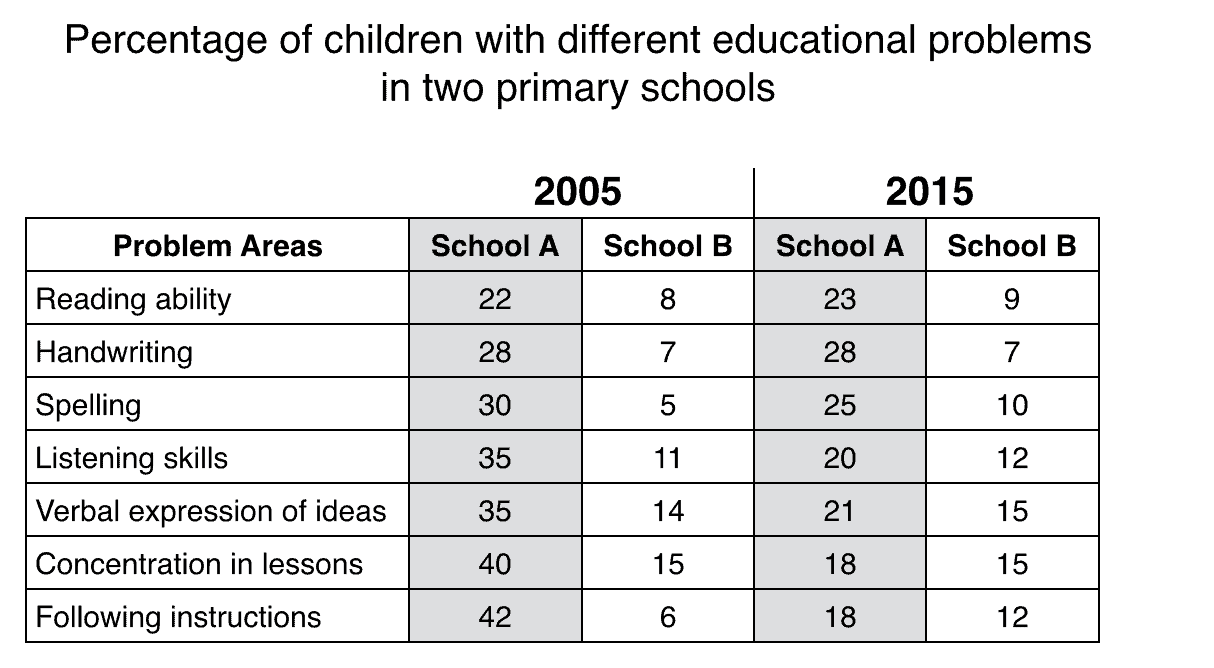
Table questions present information in rows and columns, often containing a large amount of numerical data. Many candidates find tables challenging because there are usually more figures to analyze than in other chart types.
Common IELTS Writing Task 1 topics include:
- Population statistics
- University enrollment figures
- Consumer surveys
- Import and export data
- Household expenditure
The biggest challenge is selecting the most important information. Rather than describing every figure, look for major trends, outstanding numbers, and meaningful comparisons between categories.
Example:
The table below shows the number of students enrolled in different university courses between 2010 and 2020.
5. Map
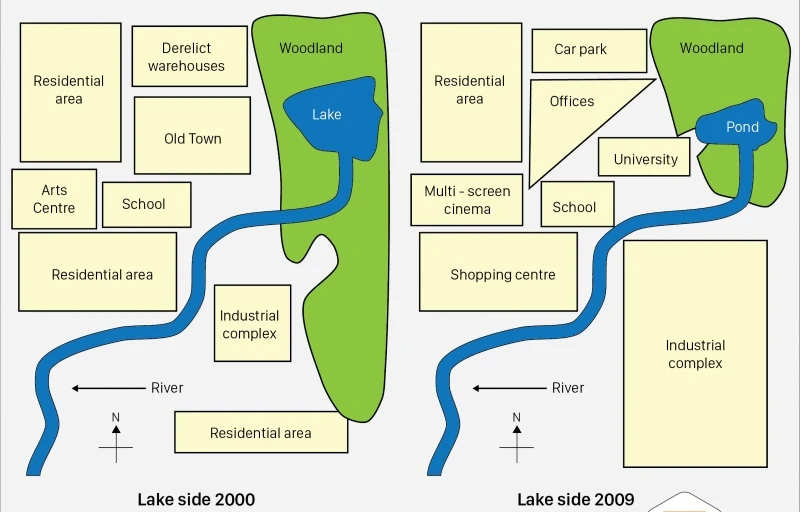
Map questions require candidates to describe the layout of a place and explain how it changes over time. In some cases, you may compare a current map with a future development plan instead of comparing past and present maps.
Common map topics include:
- Town centres
- Villages
- Schools
- Parks
- Residential areas
Unlike charts and tables, map questions focus heavily on location and change. Candidates need to describe what was built, removed, expanded, relocated, or left unchanged. Strong location vocabulary and a clear overview are essential for achieving a high score.
Example:
The maps below show the changes that have taken place in a village between 1990 and the present day.
6. Process Diagram
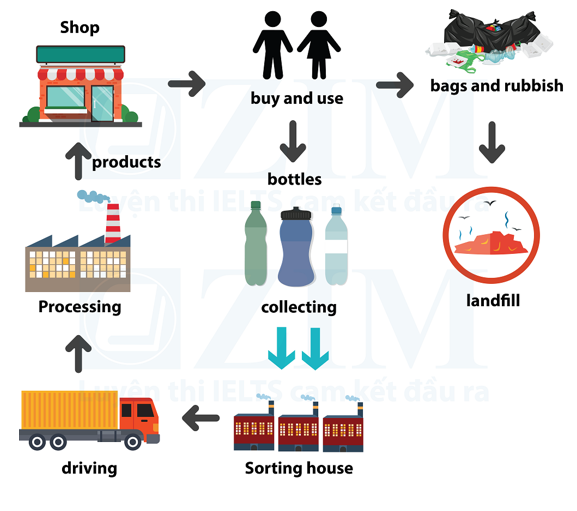
Process diagrams explain how something is produced, manufactured, recycled, or occurs naturally. Instead of comparing data, your task is to describe a sequence of stages in a logical order.
Examples include:
- Manufacturing processes
- Recycling systems
- Water cycles
- Agricultural production
- Food processing
When writing about a process diagram, focus on explaining each stage clearly and accurately. Sequencing language such as initially, subsequently, meanwhile, and finally is particularly useful. For man-made processes, passive voice is often used because the focus is on the process rather than the people performing it.
Example:
The diagram below shows how paper is recycled and reused.
By understanding these six major IELTS Writing Task 1 topics, you can quickly identify the question type in the exam and apply the most effective structure, vocabulary, and writing strategy for each one. This not only saves time but also helps you produce a clearer and more organized response.
How to Identify IELTS Writing Task 1 Topics Quickly
Before writing, spend a few moments identifying the question type.
Ask yourself:
- Is it showing change over time?
- Is it comparing categories?
- Is it describing a location?
- Is it explaining a process?
- Is it presenting percentages?
Once you identify the topic type, the structure becomes much easier to plan.
Structure for All IELTS Writing Task 1 Topics
Although the visuals and data types vary, almost all IELTS Writing Task 1 topics follow the same basic structure. Whether you are describing a graph, chart, table, map, or process diagram, organizing your response into four clear sections will make your writing more logical and easier for the examiner to follow.
A well-structured response not only improves coherence but also helps you cover all the key information required for a higher band score.
Introduction
The introduction should briefly paraphrase the task question using your own words. You do not need to include any analysis or specific details at this stage. The goal is simply to introduce what the visual information shows.
Example:
The chart illustrates the percentage of people using different modes of transportation in four cities.
Overview
The overview is the most important part of IELTS Writing Task 1 because it has a significant impact on your Task Achievement score. Instead of mentioning specific figures, summarize the most noticeable trends, comparisons, or developments shown in the visual.
For example, you might highlight:
- Overall increases or decreases
- The highest and lowest categories
- Major differences between groups
- Significant changes over time
A strong overview allows the examiner to quickly understand the key features of the data before reading the details.
Body Paragraph 1
The first body paragraph should focus on the first group of important information. Depending on the question type, you might organize the data by category, time period, or location.
The goal is to present the most significant details clearly while supporting the overview with relevant evidence.
Body Paragraph 2
The second body paragraph should describe the remaining important information. This section should continue the logical organization established in Body Paragraph 1 and include comparisons where appropriate.
Avoid describing every figure individually. Instead, focus on the most meaningful trends and relationships within the data.
Regardless of the question type, a clear Introduction -> Overview -> Body 1 -> Body 2 structure remains one of the most effective ways to approach IELTS Writing Task 1. Following this format helps improve organization, coherence, and overall writing quality across all IELTS Writing Task 1 topics.
Common Mistakes When Answering IELTS Writing Task 1 Topics

Regardless of the question type, many candidates make the same mistakes in IELTS Writing Task 1. These errors can lower your score in Task Achievement, Coherence & Cohesion, and Grammar, even if your vocabulary is relatively strong. Understanding these common problems can help you avoid losing easy marks on test day.
Missing the Overview
One of the most serious mistakes in IELTS Writing Task 1 is forgetting to include an overview. The overview is where you summarize the main trends, comparisons, or changes shown in the visual. Without it, your response may be considered incomplete, making it difficult to achieve a high Task Achievement score.
Many candidates jump directly into the details and start describing numbers or features one by one. Instead, take a step back and identify the most important information first. A good overview should highlight the big picture rather than specific data.
Reporting Every Detail
Another common mistake is trying to mention every figure, percentage, or feature shown in the chart or diagram. Since Task 1 is a summary task, examiners are not looking for a complete description of every detail.
Instead, focus on:
- The highest and lowest values
- Major trends or changes
- Significant comparisons
- Outstanding features
Selecting and grouping key information demonstrates stronger analytical skills and helps make your writing more concise and effective.
Using the Wrong Tense
Many students lose marks because they use inconsistent or incorrect tenses throughout their response. The tense should always depend on the time period shown in the visual.
For example:
- Past data -> use the past tense
- Current data -> use the present tense
- Future plans -> use the future tense or passive structures
Map and process questions often require special attention because they may involve both present and future developments. Before writing, identify the time frame carefully to avoid grammar mistakes.
Giving Personal Opinions
Unlike IELTS Writing Task 2, Task 1 is an objective reporting task. Your job is to describe the information provided, not to explain why something happened or give your personal opinion about it.
For example, avoid sentences such as:
- I think this trend is positive.
- This change is beneficial for residents.
- In my opinion, the government made a good decision.
These statements are not supported by the visual data and are unnecessary in Task 1. Focus only on what the chart, graph, map, table, or diagram shows.
Poor Organization of Information
Some candidates include all the necessary information but present it in a random order. This makes the response difficult to follow and can affect your Coherence & Cohesion score.
A better approach is to group related information together. For example:
- Describe similar categories in the same paragraph.
- Group data by time period.
- Organize map descriptions by location.
A clear structure helps the examiner understand your ideas more easily and makes your writing appear more professional.
Overusing Simple Vocabulary
Repeating the same words throughout the essay can make your writing sound limited. Many candidates repeatedly use words such as increase, decrease, change, or show without variation.
Try to use a wider range of vocabulary where appropriate:
- increase -> rise, grow, climb
- decrease -> fall, decline, drop
- change -> transform, convert, replace
- show -> illustrate, demonstrate, indicate
Using varied vocabulary naturally can improve your Lexical Resource score and make your writing more engaging.
By avoiding these common mistakes, you can significantly improve the quality of your IELTS Writing Task 1 response and move closer to a Band 7.0+ score.
Conclusion
Understanding the most common IELTS Writing Task 1 topics is the first step toward achieving a higher Writing score. By learning how each question type works, using the correct vocabulary, and following a clear structure, you can write more confidently and accurately on exam day.
If you want more Band 7.0+ sample answers, expert writing strategies, and detailed IELTS feedback, start practicing with IELTS Test Pro today and improve your Writing score faster.
