
What Is IELTS? Everything You Need To Know About The Test
If you are dreaming of studying abroad, landing a global job, or migrating to an English-speaking country, you have likely heard of IELTS. But what is IELTS exactly, and why is it the “gold standard” for English proficiency? In this comprehensive guide by Free Online IELTS Test – IELTS Test Pro, we will break down everything you need to know without the confusing academic jargon, whether you are a complete beginner or just looking to understand the test.
I. What is IELTS?
IELTS stands for the International English Language Testing System. Put simply, it is the world’s most popular English test designed for people who want to study, work, or live in environments where English is the primary language of communication.
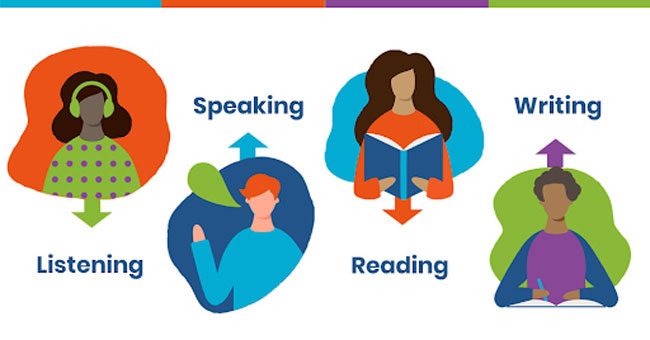
At IELTS-Testpro, we like to tell our students that IELTS is not just another boring school exam—it is literally a key to the world. To prove that you can comfortably survive and thrive abroad, the test evaluates you on four fundamental real-life skills:
- Listening: Can you understand everyday conversations and academic lectures?
- Reading: Can you make sense of books, newspapers, and informational texts?
- Writing: Can you express your thoughts clearly in essays and letters/reports?
- Speaking: Can you confidently hold a face-to-face conversation with a native speaker?
Depending on your goals, you will need to choose the appropriate version of the test:
- IELTS Academic: Measures English language proficiency for an academic environment (universities, research).
- IELTS General Training: Measures English language proficiency in a practical, everyday context (work, immigration).
>> Read more: IELTS Academic and General
Let’s see the the IELTS Score Scale
The IELTS system uses a unique scoring scale from 0 to 9. Understanding this scale is crucial for setting your study goals with IELTS-Testpro.
| Band score | Skill level | Description |
| 9 | Expert user | The test taker has fully operational command of the language. Their use of English is appropriate, accurate and fluent, and shows complete understanding. |
| 8 | Very good user | The test taker has fully operational command of the language with only occasional unsystematic inaccuracies and inappropriate usage. They may misunderstand some things in unfamiliar situations. They handle complex and detailed argumentation well.
|
| 7 | Good user | The test taker has operational command of the language, though with occasional inaccuracies, inappropriate usage and misunderstandings in some situations. They generally handle complex language well and understand detailed reasoning.
|
| 6 | Competent user | The test taker has an effective command of the language despite some inaccuracies, inappropriate usage and misunderstandings. They can use and understand fairly complex language, particularly in familiar situations.
|
| 5 | Modest user | The test taker has a partial command of the language and copes with overall meaning in most situations, although they are likely to make many mistakes. They should be able to handle basic communication in their own field.
|
| 4 | Limited user | The test taker’s basic competence is limited to familiar situations. They frequently show problems in understanding and expression. They are not able to use complex language.
|
| 3 | Extremely limited user | The test taker conveys and understands only general meaning in very familiar situations. There are frequent breakdowns in communication. |
| 2 | Intermittent user | The test taker has great difficulty understanding spoken and written English.
|
| 1 | Non-user | The test taker has no ability to use the language except a few isolated words. |
| 0 | Did not attempt the test | The test taker did not answer the questions. |
(Source: https://www.ielts.org/)
II. What is IELTS certificate?
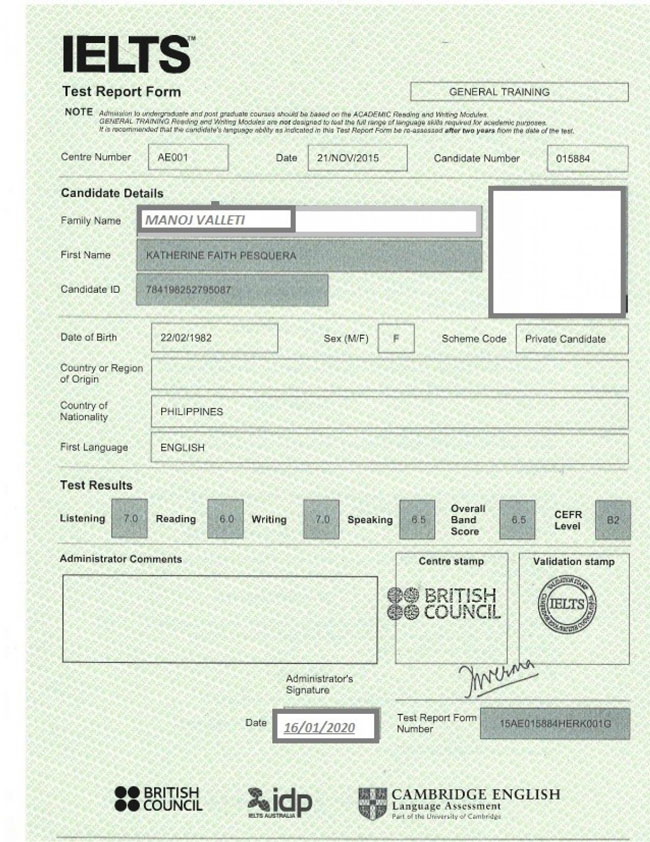
A few days after you conquer your exam, you will receive a Test Report Form (TRF). This piece of paper is your official IELTS Certificate.
How long does it last? Your certificate is valid for exactly two years from your test date. Why? Because languages are living skills! If you do not use English for two years, your fluency will naturally drop. Institutions rely on this two-year window to ensure your English skills are still sharp and ready for the challenges of their programs.
>>> See more: IELTS Beginners
III. Why is IELTS so important for your future?
Taking the IELTS test requires time, effort, and dedication. But why do millions of people choose to practice with IELTS-Testpro every single year to ace this exam? Here is the life-changing magic behind that certificate:

1. It expands your study abroad horizons
Today, almost all top-tier universities, colleges, and high schools in the US, UK, Canada, and Australia require IELTS as a mandatory entrance standard. More importantly, hitting a high score (usually 6.5 or above) can unlock massive international scholarships, significantly reducing the financial burden on your family.
2. It supercharges your career
Imagine putting a verified “IELTS 7.5” on your CV. It immediately tells employers that you are ready for global communication. An IELTS certificate gives you a massive competitive edge, empowering you to negotiate higher salaries and land dream positions in multinational corporations.
3. It makes immigration possible
If your dream is to build a new life in countries like Canada, Australia, or New Zealand, IELTS is almost always a mandatory part of the visa application. It proves to the government that you will easily integrate into their community, make friends, and succeed in the local workplace.
4. It certifies your hard work
Preparing for IELTS is a journey of self-improvement. Achieving your target score is not just about the language; it proves your resilience, your dedication, and your ability to conquer difficult challenges.
Understanding what IELTS is marks the very first step toward your global dreams. Now that you know how the test works and the immense benefits it brings to your education and career, the best time to start preparing is today. Do not walk this journey alone! Let Free Online IELTS Test – IELTS Test Pro be your trusted companion. Install our app, take a free diagnostic test to find your current level, and start practicing with our smart, interactive tools right now. Your global future is waiting!
