
IELTS vs TOEFL which is easier overall for you to take?
Many students study for months without progressing simply because they chose the wrong test format for their brain’s wiring. If you are wondering IELTS vs TOEFL which is easier?, you need hard facts, not vague advice. Let’s analyze the exact differences based on real IELTS-Testpro user data so you can pick your winning test and stop fighting the wrong battle.
What is IELTS?
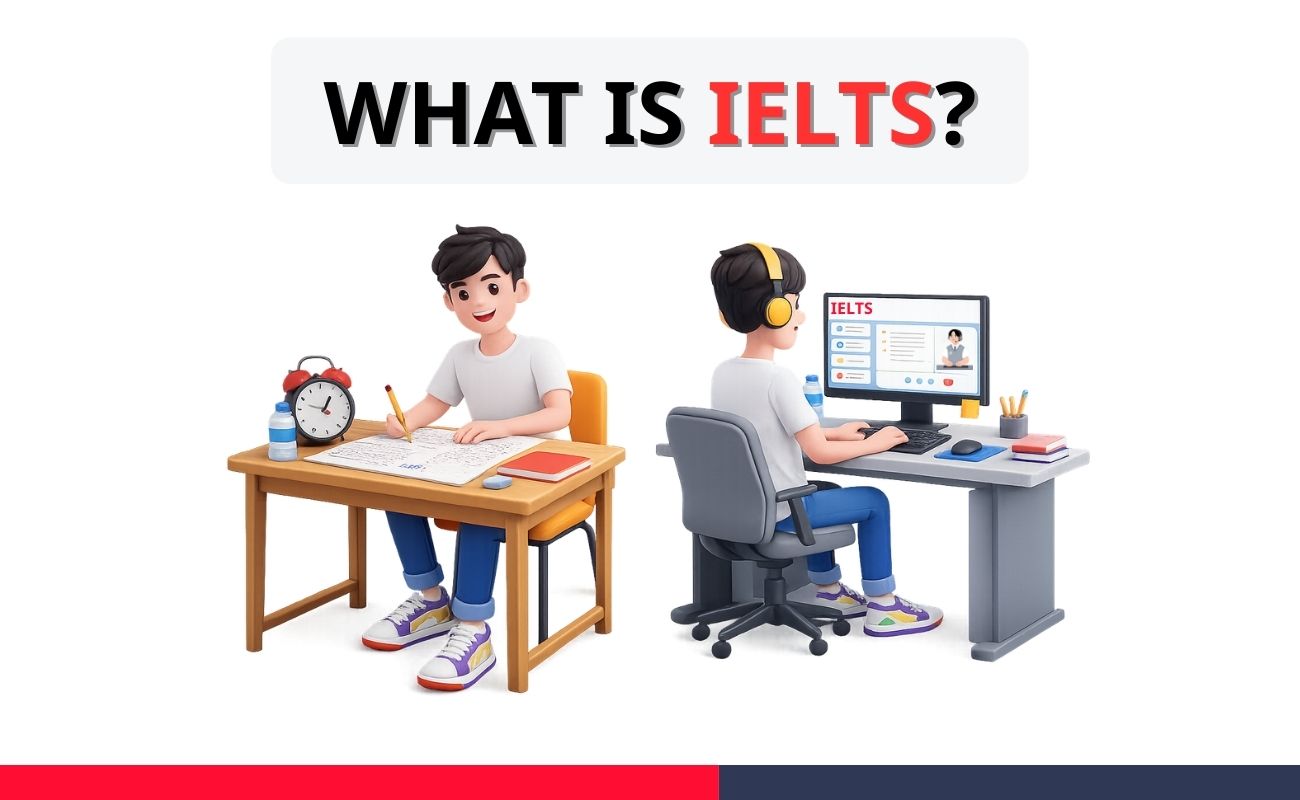
IELTS (International English Language Testing System) is a global English proficiency test. According to Cambridge Assessment English, it is designed to evaluate how well non-native speakers communicate in practical, everyday situations. It is widely required for study, work, and immigration in countries like the UK, Australia, and Canada.
The test assesses four skills: Listening, Reading, Writing, and Speaking. IELTS offers two versions: IELTS Academic for higher education and IELTS General Training for work or migration purposes. The test is jointly managed by the British Council, IDP: IELTS Australia, and Cambridge Assessment English.
What is TOEFL?
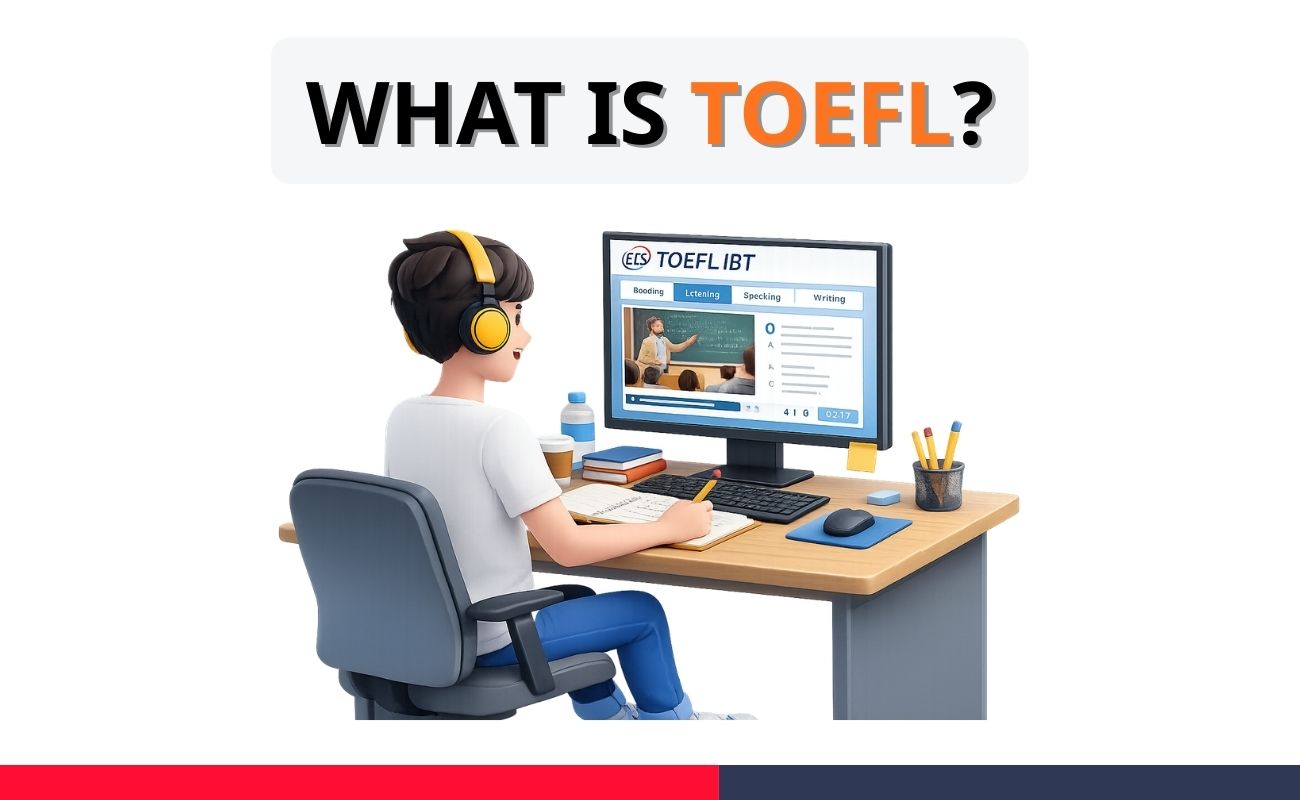
TOEFL (Test of English as a Foreign Language) is an English proficiency exam designed primarily for academic environments, especially for students applying to universities abroad.
The most widely used version today is the TOEFL iBT (Internet-based Test). Like IELTS, TOEFL evaluates four skills: Reading, Listening, Speaking, and Writing, with tasks that reflect how English is used in university settings.
Key differences between IELTS and TOEFL
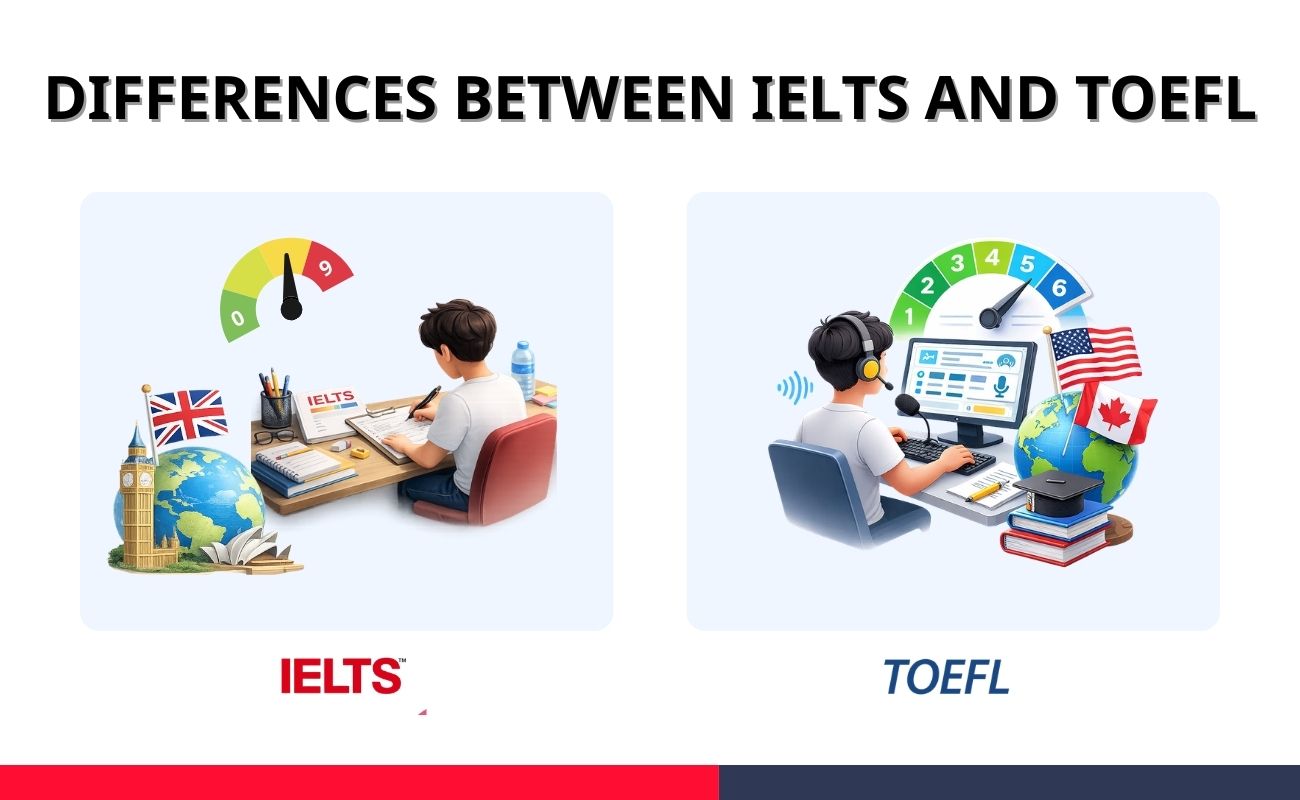
When comparing IELTS vs TOEFL which is easier, the main differences come down to format, scoring, cost, and global recognition.
Test format
One of the biggest factors when deciding IELTS vs TOEFL which is easier is the structure of each exam and how each section is delivered. While both tests measure the same four language skills, they differ in structure and how responses are delivered.
| Section | IELTS format | TOEFL iBT format |
| Listening |
|
|
| Reading |
|
|
| Writing |
|
|
| Speaking |
|
|
Verdict: IELTS is generally more straightforward and familiar for many test takers, particularly because of its clear task structure and the face-to-face speaking test.
Scoring system
To better understand the difference, let’s look at how each test is scored.
| Aspect | IELTS | TOEFL iBT |
| Section scores | Each skill scored 0-9 | Each section scored 1-6 |
| Overall score | Average of the four section scores | Average of the four section scores |
| Rounding method | Rounded to the nearest 0.5 band | Rounded to the nearest 0.5 band |
| Score familiarity | Widely known system used by universities and immigration authorities | Newer simplified band scale introduced by ETS |
Verdict: IELTS scoring is generally more familiar to most test takers, thanks to its widely recognized 0-9 band scale.
Cost
Cost is another practical factor when comparing IELTS vs TOEFL which is easier, although the difference between the two exams is usually small.
- The IELTS exam fee typically ranges from about $215 to $240
- The TOEFL iBT usually costs around $160 to $250.
In addition to the test fee, both exams may charge extra for services such as rescheduling, late registration, or sending additional score reports.
Verdict: In terms of cost, there is no clear difference, as IELTS and TOEFL are generally priced within a similar range in most countries.
Global acceptance
Both IELTS and TOEFL are widely accepted around the world, but their regional popularity differs slightly.
IELTS is accepted by more than 12,000 organizations worldwide, including universities, employers, and immigration authorities. It is particularly common in countries such as the UK, Australia, New Zealand, and many parts of Europe.
TOEFL iBT is accepted by over 13,000 institutions globally and is especially common at universities in the United States and Canada.
Verdict: TOEFL is accepted by slightly more institutions worldwide.
IELTS vs TOEFL which is easier overall?
When it comes to IELTS vs TOEFL which is easier, there is no universally easier exam. Both IELTS and TOEFL measure the same four skills (Listening, Reading, Writing, and Speaking), and the difficulty mainly depends on a candidate’s test-taking preferences and learning background.
However, many test takers feel that IELTS is slightly easier overall because the format is straightforward and the tasks are often more familiar.
The better choice ultimately depends on what kind of test experience suits you best.
IELTS may feel easier for:
- Candidates who are comfortable with face-to-face speaking interviews
- Students who prefer clear and predictable task formats
- Test takers who are used to real-life communication tasks
TOEFL may feel easier for:
- Candidates who prefer a fully computer-based test environment
- Students who are comfortable recording their speaking answers through a microphone
- Test takers familiar with academic lectures and university-style discussions
How to decide whether IELTS vs TOEFL is easier for you
If you are still unsure about IELTS vs TOEFL which is easier, the easiest test is not the same for everyone. A better way to decide is to look at how each exam matches your skills, preferences, and study goals.
- Take a practice test for both exams. Trying a practice test is the most reliable way to see which format feels easier for you. You can take a full IELTS practice test to experience the real test structure and identify your strengths before deciding which exam to take.
- Consider your speaking preferences. If you feel more comfortable speaking with a real examiner, IELTS may suit you better. If you prefer recording answers through a microphone, TOEFL might feel easier.
- Check university requirements. Some universities or programs may prefer one exam over the other, especially in certain countries.
- Think about your test-taking style. If you prefer a fully computer-based test environment, TOEFL may feel more natural. If you prefer a more traditional test format, IELTS might be a better fit.
Conclusion
The truth is, there isn’t a single “easier” test for everyone. In the debate of IELTS vs TOEFL which is easier, the right choice depends on your strengths, preferences, and test-taking style. The best way to decide is to experience the format yourself. Try a full IELTS practice test on IELTS Test Pro and see which exam feels right for you.
FAQ
1. Do universities prefer IELTS or TOEFL?
Most universities accept both IELTS and TOEFL. Some institutions may be more familiar with one test, but in general, there is no strong preference as long as you meet the required score.
2. Is TOEFL more academic than IELTS?
Yes, TOEFL is generally considered more academic because many tasks are based on university lectures and campus discussions. IELTS includes academic content as well, but its tasks often reflect real-life communication situations.
3. Which exam should beginners take?
Beginners often find IELTS slightly easier to start with because the format is more straightforward and the speaking test is a face-to-face conversation rather than recorded responses. However, the best choice still depends on your learning style and test preferences.